

Many homes currently have a Samsung 850 EVO in a drawer. Perhaps it originated from an upgraded old laptop. Perhaps it was the first SSD that a person had ever purchased, and when Windows finally stopped taking four minutes to boot, it felt almost miraculous in contrast. By 2026 standards, it’s not quick. On a good day, its maximum speed is about 560 MB/s, and any PCIe Gen 4 NVMe drive is so much faster than it is almost unfair to compare. However, discarding it would be a mistake. It might be costly.
There is a strong case against purchasing new SATA SSDs. NVMe drives have reduced the price difference to the point where it is nearly impossible to defend SATA’s superior performance. The cost of a 1TB SATA drive is approximately $100. The starting price of a 1TB PCIe Gen 4 NVMe is about $105. There is a huge architectural difference: SATA’s AHCI interface handles a single queue with 32 commands, whereas NVMe’s protocol supports 64,000 command queues concurrently. There is a noticeable difference in anything that requires a lot of reading and writing. In 2026, no one should use SATA when developing a new system. That portion of the argument makes sense.
However, the repurposing argument is a completely different discussion that is more important than ever. Due to AI infrastructure consuming NAND flash supply more quickly than manufacturers can reroute it, SSD prices are generally rising. Late last year, there were rumors that Samsung might completely stop producing SATA. Although the company refuted these claims, the price pressure they described is still present. A working drive that is idle in that setting is not disposable. It’s an asset.
| Category | Details |
|---|---|
| Technology | SATA SSD (Serial ATA Solid State Drive) |
| Interface | SATA III — maximum sequential read/write speed of ~560MB/s |
| Compared To | NVMe SSDs (PCIe Gen 3/4/5) — significantly faster; Gen 4 drives commonly exceed 5,000MB/s |
| Key Limitation | AHCI protocol — single command queue, max 32 commands vs. NVMe’s 64,000 queues |
| Samsung News | Reports emerged of Samsung potentially halting SATA SSD production; Samsung denied; price pressure expected up to 18 months |
| Current Market | 1TB SATA SSD ~$100; 1TB NVMe PCIe Gen 4 from ~$105 — price gap nearly closed |
| Notable Models | Samsung 850 EVO, 860 EVO, 870 QVO; Crucial MX series; SanDisk SATA range |
| AI Impact on Storage | Enterprise AI demand consuming NAND flash supply, driving consumer SSD prices up across all categories |
| Best Use Cases | Scratch disk, media cache, OBS recording, overflow game library, homelab VMs, rescue/recovery drive |
| Longevity Data | Samsung 850 EVO at 14 years old, 46.7TB written — still at 80% health (user-reported) |
| Reference Links | How-To Geek — 6 Jobs for Old SATA SSDs · How-To Geek — Stop Buying SATA SSDs |
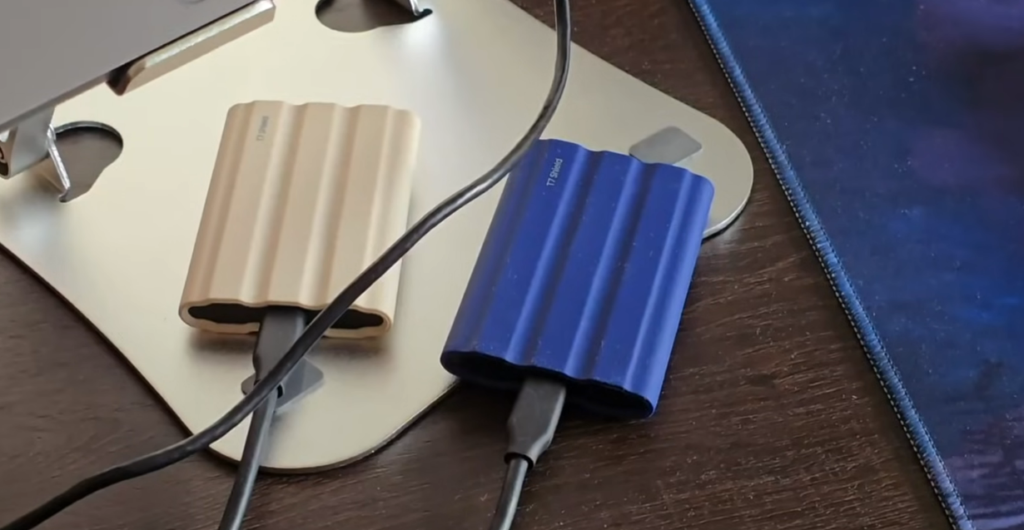
Scratch-disk duty, the unglamorous but genuinely helpful function of absorbing temporary files produced by Photoshop, Premiere, DaVinci Resolve, and anything else that generates write-heavy disposable data, is the most obvious second life for an aging SATA SSD. Anyone who regularly works with image editing is aware of how quickly temporary files build up, particularly when RAM is limited and the program begins to rely on disk space. It is simple, reasonable, and free to route all of that to an older SATA drive rather than allowing it to reduce the write endurance on a primary NVMe if the drive is already owned.
A logical progression of the same concept is media cache. Large amounts of preview files, render caches, and rough export dumps are accumulated by video editors using Adobe Premiere or Final Cut Pro. Many of those files are reference points that the software maintains just in case; they are rarely used again. A SATA SSD keeps the primary drive clean and is more than quick enough for cache access. The same issue affects streamers who record with OBS: the raw capture files can grow to dozens of gigabytes per session, and the majority of them are erased after editing. That amount of disposable data has no business competing with anything significant for space.
Another area where SATA continues to be successful is game libraries. Play speeds are not necessary for storage, but playing straight from SATA instead of NVMe results in noticeable load time differences in contemporary titles. Both NVMe space and the mental strain of continuously reinstalling and redownloading games are preserved by keeping an overflow library of installed games on a SATA drive and moving them to the faster drive prior to a session. This arrangement will appeal to anyone who has persuaded themselves that they will “eventually” replay a game.
The homelab use case has a subtle satisfying quality. Perfect SATA material includes virtual machines, OS images, test environments, and experimental setups that no one wants to combine with their primary system configuration. The drive turns into a contained area for mayhem, where items can be installed, damaged, cleaned, and reinstalled without worrying about what’s around them. It’s difficult to ignore how much easier a computer feels when the disorganized experimental layer has a place of its own.
Perhaps the most underappreciated use case of all is the rescue drive use case. When the primary storage fails or becomes unreachable, a SATA SSD loaded with boot tools, recovery utilities, drivers, and system repair software becomes the drive that saves an entire computer. It’s the kind of planning that seems pointless until it’s not. Additionally, a SATA drive in a portable enclosure performs this function faster and more durably than a USB stick, eliminating the need for any drive that is still making money elsewhere.
Now is the NVMe era. That is undeniable. However, storage hardware doesn’t exactly function that way, and there is a tendency in tech culture to treat anything superseded as worthless. After thousands of hours of use, an 8-year-old Samsung 850 EVO that reports 80% health is not a relic; rather, it is a drive with decades of useful life left, just waiting for the right assignment. Throwing it away before it has a chance to be useful again is the only true mistake.
