

Dunkelflaute, which translates to “dark doldrums” in German, sounds poetic until you realize what it actually means for a power grid. It describes those long stretches of time when the sun doesn’t shine for days at a time and the wind stops blowing. Hawaii experienced cloud cover for six weeks in a row in 2006. Wind droughts have lasted far longer than a week in Europe. The same unsettling question comes up each time a grid manager sees a Dunkelflaute roll in while renewable generation flatlines: where is the backup power coming from?
Fossil fuels were the solution for decades, and lithium-ion batteries with a maximum discharge window of four to six hours have been the solution for the past ten years. For a grid that is serious about completely replacing gas peakers, neither solution is adequate. That’s why four companies — Unigrid in the United States, CIUDEN in Spain, Sunamp in Scotland, and Inlyte Energy working across markets — are all advancing non-lithium storage technologies at the same time, from different starting points, using different chemistries, pointing toward the same destination.
| Category | Details |
|---|---|
| Technology Area | Non-Lithium Long-Duration Energy Storage (LDES) |
| Company 1 — U.S. | Unigrid — sodium-ion (Na-ion) battery using sodium chromium oxide (NCO) chemistry |
| Unigrid Milestone | 5,000 full-depth cycles at 100% depth of discharge with >95% capacity retention; projected cycle life 20,000; operational life up to 25 years |
| Comparison | Lithium iron phosphate (LFP) batteries: up to ~12,000 cycles |
| Company 2 — Spain | CIUDEN — advancing non-lithium energy storage technology (thermal/advanced chemistry) |
| Company 3 — Scotland | Sunamp — phase-change thermal energy storage technology |
| Company 4 — U.S./UK | Inlyte Energy — non-lithium grid-scale storage development |
| Other Notable Players | Form Energy (iron-air, 12GWh AI data centre deal signed March 2026); EnerVenue ($300M raised for lithium-free storage) |
| Spain Energy Context | Spain launched Energy Storage Strategy 2025–2030; up to 40% direct funding for qualifying projects |
| Global Battery Market | Surpassed $150 billion; deployment 6x higher than 2020 (industry data) |
| Key Problem Being Solved | Dunkelflaute (multi-day renewable lulls) requiring 100+ hour grid storage |
| Reference Links | Energy-Storage.News — Non-Lithium Advances in US, Spain, Scotland · The New Yorker — The Renewable-Energy Revolution Will Need Renewable Storage |
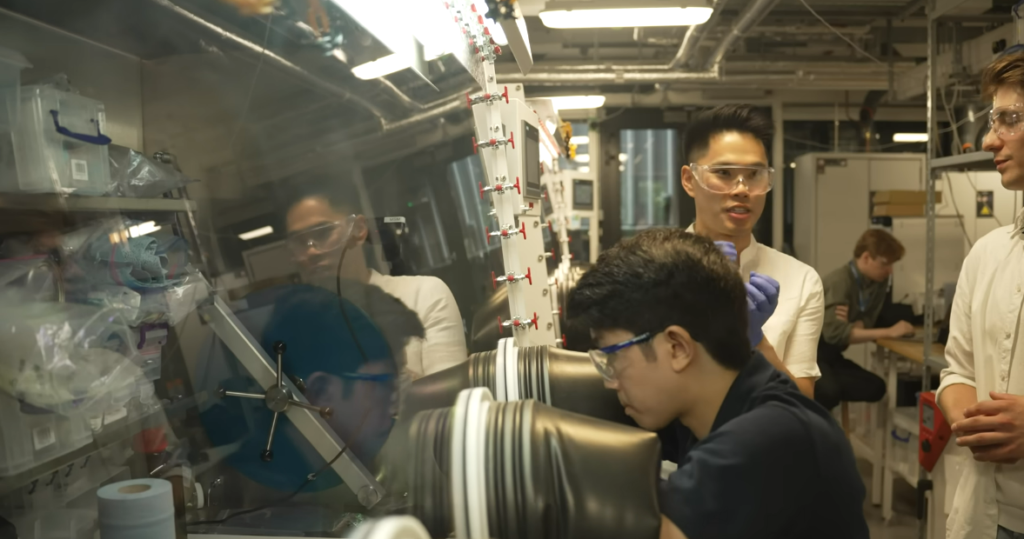
Right now, Unigrid’s announcement is arguably the most tangible piece of information. The company’s sodium chromium oxide (NCO) chemistry — a sodium-ion approach that uses one of the world’s most abundant metals rather than lithium — achieved 5,000 full-depth cycles at 100% depth of discharge while retaining greater than 95% of its original capacity. In the context, that is a significant number. Lithium iron phosphate, currently one of the better-performing lithium chemistries, achieves around 12,000 cycles over its lifetime. Unigrid projects its NCO cells will reach 20,000 cycles with an operational life of up to 25 years — long enough to match the lifespan of a solar panel installation. The commercial implication is straightforward: a battery that lasts as long as the renewable asset it’s paired with doesn’t need to be replaced midway through the project’s life, which changes the economics of grid storage considerably.
It is also worthwhile to consider sodium’s attractiveness as a base material. The most mined metal on Earth is iron. Sodium is similarly plentiful. The intricate, geopolitically sensitive supply chains needed for cobalt and lithium are not necessary for either. A significant amount of the world’s cobalt comes from the Democratic Republic of the Congo. Australia and Chile are the two countries that extract the most lithium. Grid planners must avoid the kind of supply chain fragility that results from building a storage industry on those dependencies, as the past ten years have shown. While they don’t address every issue, non-lithium chemistries lessen reliance on the most contentious materials.
In Spain, CIUDEN has been working on its own energy storage approaches as the country rolls out an ambitious Energy Storage Strategy covering 2025 through 2030, with direct funding support of up to 40% for qualifying projects. Spain’s solar resource is exceptional — the country regularly generates more solar electricity than it can immediately consume during peak hours — which makes long-duration storage not a theoretical future need but an immediate operational one. Both an economic loss and a policy failure are represented by curtailed solar energy, which is energy that is produced but then simply wasted because the grid is unable to absorb or store it. The Spanish renewable buildout is functional rather than just aspirational because of non-lithium storage systems that can absorb that excess and release it during evening demand peaks or multi-day weather lulls.
In Scotland, Sunamp has been developing phase-change thermal energy storage — a technology that stores heat rather than electricity, using materials that absorb and release large amounts of energy as they shift between solid and liquid states. It addresses a slightly different aspect of the energy problem—heat rather than power—and is a seemingly straightforward idea with substantial engineering complexity. Heating and cooling account for about half of all energy used worldwide, a portion of the energy transition that battery-focused thinking tends to overlook. The Scottish climate, with its genuine need for space heating and its extraordinary offshore wind resource, makes Sunamp’s approach particularly well-suited to its home geography.
Inlyte Energy, working on non-lithium grid storage of its own, adds another node to what is starting to look less like a collection of isolated experiments and more like a coordinated, if unplanned, global push. It’s hard not to notice that the same underlying pressure — grid systems that need storage measured in days rather than hours, using materials that are genuinely abundant — is producing simultaneous development across continents with no direct coordination between the teams involved.
The broader context is worth holding. Global battery markets have surpassed $150 billion and deployment is running at six times the 2020 level. Most of that volume is still lithium-ion. But as one energy storage researcher put it years ago, what the grid needs is a whole suite of storage methods — not a single dominant chemistry applied to every problem, but a layered system where different technologies serve different timescales and use cases. The 100-hour storage problem that lithium can’t solve economically is exactly where sodium-ion, thermal storage, iron-air, and phase-change technologies are finding their respective footing. It’s still unclear if a single chemistry prevails in that competition or if multiple chemistries endure to serve various grid segments. However, the race itself is real and is taking place in more nations and labs than the energy transition discourse usually recognizes.
