

One of the most famous athletes on the planet, Steph Curry, appears to be teasing a new wearable from Google in a video that is making the rounds. It doesn’t appear to be a watch. It appears more like a simple band, the kind that doesn’t ping, light up, or attempt to display an email notification. Only a band. It’s difficult to avoid the conclusion that the company that killed Fitbit smartwatches is developing a screenless fitness tracker, and the timing is telling, even though Google hasn’t confirmed exactly what it is.
2023 saw the release of the Fitbit Charge 6. Since then, nothing has been released under the Fitbit brand. In late 2025, Google announced that new Fitbit hardware would be released in 2026, but it did not specify what form it would take. The company had already declared in 2024 that Fitbit would completely cease producing smartwatches, handing that responsibility over to the Pixel Watch line. Fitbit’s next move can only go in one direction: sideways into something more specialized rather than up the value chain into smartwatch territory. Something that performs better but does less.
| Category | Details |
|---|---|
| Topic | Google’s planned screenless Fitbit fitness band for 2026 |
| Google Acquisition | Google acquired Fitbit in 2021 for ~$2.1 billion |
| Last Fitbit Tracker Released | Fitbit Charge 6 (2023) — the most recent fitness band under the Fitbit brand |
| Last Fitbit Smartwatch Released | Fitbit Versa 4 — Google subsequently announced Fitbit would no longer produce new smartwatches (August 2024) |
| Fitbit Smartwatch Successor | Google Pixel Watch series took over the smartwatch role |
| Confirmed Plans | Google confirmed “launching new Fitbit hardware next year” in a statement to 9to5Google (October 2025) |
| Screenless Competitors | Whoop (Boston-based, subscription model, no screen, worn by pro athletes); Polar Loop |
| Whoop Business Model | Hardware free or subsidized; subscription at $30/month — nearly the cost of a new Apple Watch per year |
| Key Market Advantage — Screenless | Better sleep tracking (worn at night), more comfortable during contact sports, longer battery life |
| Key Design Problem — Touchscreens | Sweaty fingers + small screen = unreliable touch during workouts; cited consistently in fitness tracker reviews |
| Steph Curry Connection | Google teased a new wearable linked to Steph Curry — consistent with a performance-focused screenless device |
| Reference Links | TechRadar — Fitbit New Hardware 2026 · Android Central — Fitness Trackers Ditching Buttons for Touchscreens |
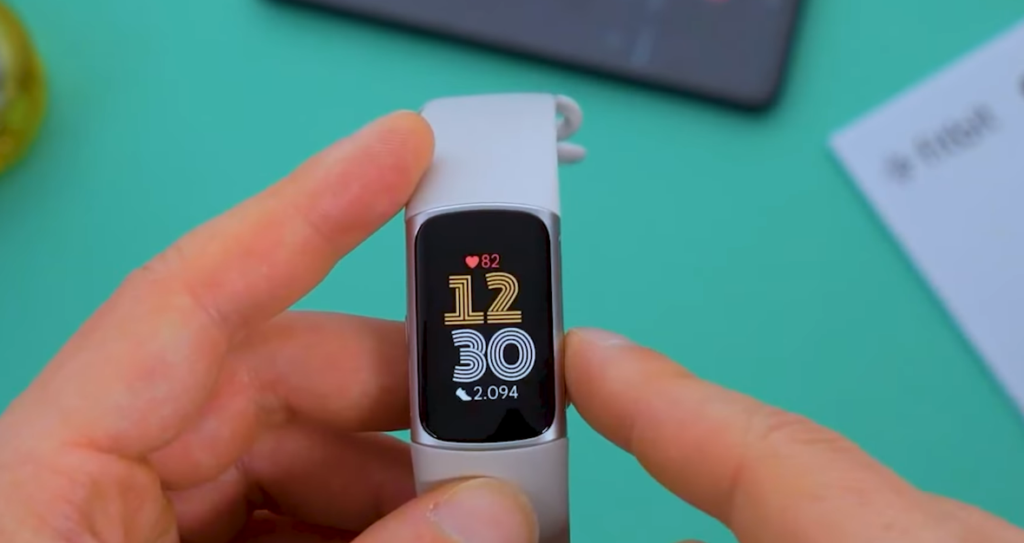
The argument for a screenless fitness band is stronger than it may seem. Consider the real challenges associated with using a smartwatch as a medical device. Because the watch is uncomfortable, most people either remove it while they sleep or charge it overnight, which causes them to completely miss the sleep data. A stiff screen on your wrist is dangerous when participating in contact sports. OLED displays that look stunning in a photo studio become almost invisible in direct California sunlight during vigorous outdoor workouts. Anyone who has attempted to stop a workout timer in the middle of a run can relate viscerally to the combination of touchscreens and sweaty fingers. The screen, which constitutes the entirety of a smartwatch’s value proposition as a lifestyle item, turns into an active impediment as soon as you start doing the task for which it is intended.
Years ago, Whoop realized this. The Boston-based company created a fitness tracker with no display at all, linked it to a subscription service that evaluates strain, recovery, and sleep quality, and persuaded professional athletes and their fans that the data was more valuable than the interface. It’s not a very attractive gadget. It’s a band without a screen that has sensors and a charging module. However, you never need to take it off because it charges while you wear it. Because of its always-on, never-removed quality, the data is truly continuous rather than patched together during periods when the device was resting on a nightstand. By doing this, Whoop developed into a billion-dollar business. With some of its recovery-focused products, Garmin has been heading in a similar direction. The Loop belongs to Polar.
In other words, the concept has already been validated by the market. Google is choosing whether to enter a well-established market with its significant advantages—Fitbit’s well-known brand, Google’s AI and data analysis capabilities, and distribution at a scale that Whoop cannot match—rather than creating something entirely new. The competitive dynamic changes significantly if Google can provide something similar at a lower price point without requiring a subscription, and Whoop’s subscription model costs about the same as a new Apple Watch each year.
It’s difficult to ignore the fact that this is a clear departure from the failure mode of the previous few years. Combining “the best AI, software, and hardware” to create better wearables was the initial pitch when Google bought Fitbit in 2021. Fitbit products stagnated while Google determined their place in relation to Pixel Watch during the ensuing period of organizational confusion, and many industry observers questioned whether the brand would survive at all. Even in the absence of details, the announcement of new Fitbit hardware indicates that the confusion has been resolved into a clearer strategy: Fitbit takes care of serious health tracking, while Pixel Watch handles the lifestyle smartwatch category.
If Google is headed in that direction, it would be an intriguing wager in a wider sense. For the past ten years, the smartwatch industry has worked to create a health gadget that doubles as a tiny smartphone on your wrist. The Apple Watch is the best at this, but it still needs to be charged every night, which means that sleep data collected during the night is either lost or compromised. The alternative concept, which calls for a gadget that performs fewer tasks but never shuts off, has always existed, but it necessitated a willingness to give up the screen that the majority of mainstream consumer technology refuses to produce.
There’s a sense that the wearables market is about to fork as we watch this develop. Larger screens, more apps, and increased phone integration are some options. The other is lighter, smaller, and more undetectable; it’s a gadget you don’t notice because it’s always on and doesn’t require anything from you other than to wear it. Google is making a clear decision about which direction it believes has room to grow by abandoning Fitbit’s smartwatch aspirations and seemingly embracing the screenless alternative.
