

Outside of Fort Worth, there is a section of land where, until recently, only the occasional cattle fence or grain elevator broke up the flat Texas horizon. That is evolving. The Chisholm Grid Battery Energy Storage System was more than just another infrastructure project when work on it began in August 2020. Located in the middle of ranch country, it was the largest standalone battery storage system under construction outside of California at the time, making a subtle statement.
The project, which was created by Able Grid Energy Solutions, MAP Energy, and Astral Electricity, measured 100 MW and, when finished, is expected to have a total capacity of 400–600 MWh. Anywhere, that is a significant number. It was almost defiant in Texas, as if the state was declaring that it didn’t need to look west for approval to carry out large-scale initiatives. As this develops, it’s difficult not to question whether Fort Worth was always the best option or if the city unintentionally found itself in a more significant situation than anyone anticipated.
| Category | Details |
|---|---|
| Project Name | Chisholm Grid Battery Energy Storage System |
| Location | Fort Worth, Texas, USA |
| Project Capacity | 100 MW (estimated 400–600 MWh total storage) |
| Developers | Able Grid Energy Solutions, MAP Energy, Astral Electricity |
| Battery Technology | Lithium-ion (largest standalone system outside California at construction) |
| Construction Start | August 2020 |
| Commercial Operations Target | Mid-2021 |
| Texas Grid Authority | ERCOT (Electric Reliability Council of Texas) |
| Texas Solar Ranking (National) | 2nd in solar energy production; 1st in wind energy (commercial sector) |
| Tarrant County Federal Solar Funds | $7 million (part of $250M federal award, 2024) |
| Texas Agricultural Land Used for Energy | Over 80% of state land is agricultural; significant wind and solar potential mapped across all 254 counties |
| Relevant Trend | Community Solar 2.0 — hybrid solar-plus-storage projects replacing standalone installations across the US |
Texas has a unique place in the American energy narrative. While operating the majority of its grid through ERCOT, separate from the national interconnected system, it produces more commercial wind power than any other state and ranks second in solar. Over 80% of its land is used for agriculture. Researchers at Texas A&M University-Kingsville have mapped the wind and solar potential throughout all 254 counties and discovered that farms in a number of areas have enough capacity to power both their own operations and the nearby population. That is not an optimistic projection. Based on field measurements and census data, it is a geospatial analysis.
Contrary to popular belief, the rural perspective is important. Community solar has long been portrayed as a program for residents of shaded lots or apartments who are unable to install solar panels on their own roofs. However, that framing has always felt lacking, particularly in states like Texas where agricultural land is abundant and frequently underutilized in terms of energy. In 2024, Tarrant County, which includes Fort Worth, received $7 million in federal funding to expand local solar projects. This is a small portion of a $250 million national allocation, but it is symbolic for a county that hasn’t historically taken the lead on clean energy policy.
The economics of interconnection is currently changing. The easy grid access points have already been claimed by developers in well-established markets like Massachusetts and New York. What’s left needs costly improvements. Battery systems that can store energy and release it during peak demand make projects more appealing to utilities concerned about grid congestion, as industry observers have noted. As a result, storage has evolved from being a nice addition to something closer to a necessity. Perhaps Fort Worth’s Chisholm project was ahead of this dynamic more than anything else. A standalone 100 MW battery in a state built on fossil fuel infrastructure was always going to raise concerns about what would happen next, even though the developers didn’t frame it that way at the time.
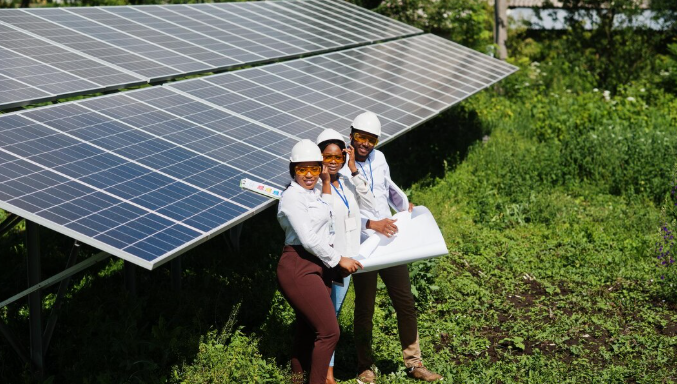
The community solar industry is also undergoing a consolidation. Customers are receiving credits directly on their utility bills instead of through separate developer invoices thanks to mechanisms like Utility Consolidated Billing, which is now required in states like Colorado and Maryland. Dropout rates are reduced when there is less friction. Financing is easier when dropout rates are lower. Even though the system is still disorganized, lenders are gradually finding it easier to understand. This change may ultimately benefit rural projects disproportionately due to their larger land footprints and fewer permitting conflicts.
It’s still unclear if the Chisholm project will continue to be a significant anomaly or if Fort Worth will develop into the model city it appears to be positioned to be. However, there is a sense that the energy future being prototyped here is more of a continuation of what Texas has always done, which is to extract and export power at scale, but with different inputs, rather than a break from what Texas has always done. The land remains unchanged. It appears that the ambition hasn’t changed all that much either.
