

There’s a certain false sense of security that results from selecting “delete.” The file is no longer visible. The folder is empty. The desktop appears tidy. Every single one of those files is still perfectly intact on a hard drive somewhere in a storage room, a box by the printer, or a recycling bin, just waiting for someone with the right resources and the right incentive to retrieve them. This vulnerability isn’t hypothetical. Which?, a UK computing magazine, once purchased eight computers on eBay and recovered 22,000 deleted files from them, including passwords, customer information, logins, and private correspondence. Everything. from eight devices. sold used by people who probably thought they had cleaned them.
The fundamental misconception that underlies this issue is pervasive and enduring. The majority of people believe that performing a factory reset, reformatting a drive, or moving files to the trash and emptying them all amount to erasure. It doesn’t. The index entry, which informs the operating system of a file’s location, is eliminated by those actions. Until something new is written over the exact same physical location, the data itself remains unaltered on the magnetic platter. That could result in years of uninterrupted recoverability on a sizable drive that is largely empty. The files are still there. They simply lack labels.
| Category | Details |
|---|---|
| The Core Problem | Deleting, reformatting, or overwriting a hard drive does NOT make data unrecoverable — only destroying the magnetic platter guarantees permanent erasure |
| Real-World Example | UK computing magazine Which? recovered 22,000 “deleted” files from just eight computers purchased on eBay — passwords, customer records, and personal data all intact |
| Average Device Lifespan | Desktop and laptop hard drives typically last 3–5 years, meaning most organizations retire large numbers annually without adequate data destruction protocols |
| Two Approved Methods | Certified data erasure (software-based, NIST-approved, for reusable drives) and certified physical destruction (shredding/crushing, for drives that cannot be reused) |
| Degaussing Standard | Degaussers must apply a minimum 7,000 gauss force to completely erase a drive; NSA-approved models (e.g., SDD Master) required for government security compliance |
| Destruction Speed | Professional degausser + crusher combination can erase and destroy each drive in under 30 seconds; automated systems process up to 200 drives per hour |
| Hammer Method Verdict | Insufficient — sophisticated forensic techniques can recover data from physically damaged platters; hammer treatment alone does not guarantee unrecoverability |
| Compliance Standards | NAID AAA, R2v3, and ISO certifications required for compliant destruction; organizations must produce certificates of destruction and itemized asset reports for audit purposes |
| Chain of Custody Requirement | Drives must be stored in sealed, locked containers before destruction; GPS-tracked transport required for off-site destruction; never sent to generic recyclers |
| On-Site vs. Off-Site | On-site destruction eliminates transport risk entirely — certified technicians destroy drives before they leave premises; preferred in highly regulated or classified environments |
Addressing the platter directly is the only way to truly render data unrecoverable. There are two ways to do this correctly. The first is certified software erasure, a NIST-approved procedure that overwrites the drive in a controlled, verifiable order before testing it to make sure no data is left. When the drive is still functional and eventual reuse or resale is the aim, this approach works well. The second option is physical destruction, which involves shredding or crushing the drive until the magnetic platter—which contains the actual data—is reduced to unreadable fragments. When both strategies are used correctly and with the appropriate paperwork, the results can be given to an auditor. The crucial term is “done correctly.” A hammer is obviously appealing, but it doesn’t always meet the requirements.
This is the point at which engineering reality and intuition diverge. As one YouTube channel showed with mild results, running a hard drive over with a car leaves the platters more intact than most people anticipate. When a single hole is drilled through the casing, the object appears destroyed but still has readable data on the sections the drill missed. For high-sensitivity settings, even breaking the platter into big pieces might not be enough because forensic recovery tools can handle fragments.
The crucial standard, which NSA-approved equipment is designed to meet, calls for degaussing at a minimum of 7,000 gauss, which completely collapses the magnetic domains on the platter, followed by physical crushing that leaves nothing big enough to reconstruct. An entire drive can be processed by professional systems in less than thirty seconds. The end product is a tiny, flat, jumbled object that is theoretically devoid of any information.
The calculus is easier for individuals than for organizations when it comes to getting rid of a personal computer, but the stakes are still very high. If the previous owner simply erased files before donating it, a laptop purchased at a thrift store in practically any city will still have their browsing history, saved passwords, tax returns, medical records, and photos. It’s difficult to ignore how carelessly most people handle this, putting an old machine on a curb or sliding it into a donation bin without giving what’s inside any thought. It appears that no one would bother to look. That is sometimes the case. However, the cost of being incorrect is not commensurate with the effort required to be correct, which for the majority of people consists of a few minutes using a free software tool or the willingness to physically open the machine and harm its internal components.
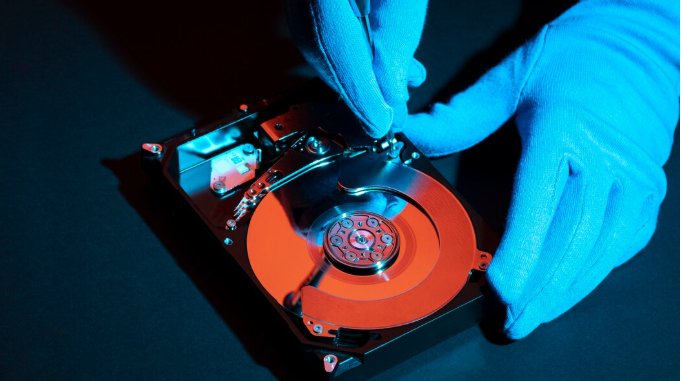
The exposure is greater and the standards are more stringent for organizations. Regulations pertaining to government data, healthcare, and finance all demand proof of destruction, not merely conjecture. Serial numbers, destruction techniques, timestamps, and chain-of-custody records from the time a drive was taken out of service until it was verified to be destroyed must all be included in this paperwork, which is known as a certificate of destruction.
Drives that are waiting for someone to arrange for a shred truck while sitting in boxes in a storage room are precisely the type of undocumented liability that makes headlines during a breach investigation. Just because no one has examined the drives yet doesn’t mean they are secure. When the platter is gone, they are safe. Until then, the data remains unaltered, patient, and fully recoverable by anyone who knows where to look.
