

The drawer appeared harmless, and that was exactly the issue, since it conveyed a serene permanence that was incredibly dependable and subtly comforting to anyone who relied on technology to act in a predictable manner. Inside were multiple hard drives, each containing fragments of one’s professional and personal history that had been meticulously maintained before being forgotten with a sense of assurance that now seems a little out of place. For many years, many individuals thought this approach was very successful, assuming that digital storage preserved memories without needing care or attention, much like a sealed vault.
Millions of people have adopted external drives as personal archives over the past ten years due to their surprisingly low cost, which makes it incredibly easy to save creative work, research data, and family photographs. These devices appeared to be especially helpful for long-term preservation since they offered large capacity in small forms, giving users a sense of autonomy and ownership that cloud subscriptions might not always deliver. Anybody could unplug the disk, set it aside safely, and presume that everything within would stay precisely as it was. The procedure felt very flexible.
But what follows occurs slowly and almost imperceptibly, driven by the physics of stored information gradually losing stability rather than mechanical failure. The binary structure that makes digital data usable and meaningful is represented by each of the magnetic sections that make up hard drives, which are placed with remarkably accurate alignment. As time passes, the magnetic fingerprints gradually deteriorate and change orientation, finally coming to a point where the stored message is changed without any prior notice or obvious harm.
| Key Fact | Details |
|---|---|
| Core Problem | Hard drives and SSDs can lose data over time even when not in use |
| Scientific Cause | Bit rot, where stored bits degrade or flip due to physical and electrical decay |
| Hidden Nature | Files may appear intact but become corrupted internally |
| Risk Factors | Long periods without power, heat, humidity, and aging components |
| SSD Vulnerability | Electrical charges leak over time if drives remain unplugged |
| Prevention | Periodic power-up, multiple backups, and proper storage conditions |
| Long-Term Reality | No storage medium guarantees permanent preservation |
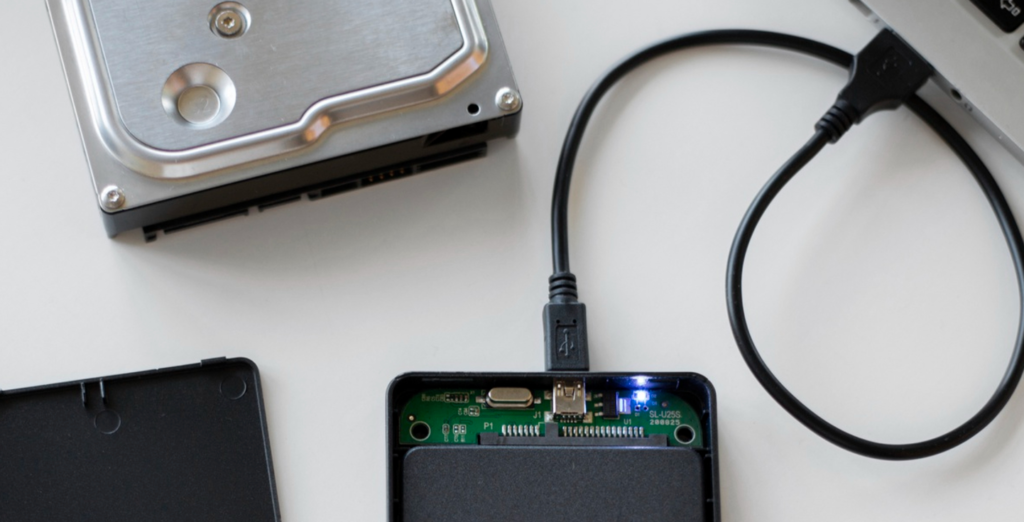
A remarkably comparable weakness, albeit through electrical rather than magnetic deterioration, affects solid-state drives, which are sometimes hailed for being noticeably quicker and incredibly durable. They rely on energy barriers to keep the trapped electrical charges that store information in place, hence they are only stable as long as the physical structure is intact. Long lengths of time without power cause the charges to gradually drain away, decreasing precision and weakening the reliability of the recorded data.
Because the disk still seems to be in working order, booting up smoothly and displaying familiar file names with remarkably clear organization, many users find this degradation to be incredibly paradoxical. Even while minute alterations subtly alter the data itself, producing corruption that might not be discovered until years later when a file is eventually read, the appearance of safety is maintained. The reassuring notion that preserving anything digitally ensures its existence is called into question by this silent change that is happening gradually.
Years ago, I spoke with a retired engineer who told me that when he opened an old backup of his children’s early photos, he found that several of them were completely warped. Though he talked calmly, it was clear that he was disappointed, as though he had opened a neatly sealed letter to discover that the ink had faded too much to be salvaged. That moment brought to light a reality that was eerily reminiscent to witnessing the contrast in an old printed photograph fade after decades of exposure.
I recall pondering how something intended for preservation may subtly lose sight of its own function.
Error-correction systems, which continuously check stored data and fix weak spots before they become irreversible failures, are incredibly successful at halting this kind of deterioration in the context of modern computing. These systems actively monitor and refresh the drive’s contents to ensure stability, but they only work when the drive is powered on. Those safeguards are inactive when a drive is left unplugged for years, enabling slow degradation to build up unchecked.
While annoying for anyone wishing to permanently retain digital memories, environmental factors have a particularly inventive scientific impact on this process. The lifespan of stored data is greatly shortened by heat, which speeds up magnetic instability, and humidity, which encourages corrosion. The physical components that keep data intact can be weakened by even small temperature changes that happen gradually over the course of seasons.
Lubricants, which facilitate the smooth working of internal parts, are among the other aging components that pose a risk to mechanical drives. These lubricants have the tendency to thicken or settle unevenly over time, which can make the drive more difficult to use and possibly restrict access to otherwise intact data. These slow physical changes serve as a reminder that storage devices are still physical objects with the same constraints as other machines.
Because of improvements in materials, firmware, and backup techniques, modern storage is now incredibly dependable when properly maintained, even with these weaknesses. In order to strengthen weak signals and restore stability before harm becomes irreversible, users can enable internal systems to refresh stored data by periodically activating drives. This easy habit, which takes very little work, is a very useful method of prolonging the life of priceless archives.
Users can drastically lower the chance of irreversible loss by keeping multiple copies on various media, which guarantees that even in the event of a drive failure, another will still be functional. This method, which is highly advised by data experts, has shown remarkable success in maintaining important data for extended periods of time. Digital storage can be become a reliable tool for long-term preservation rather than a flimsy promise with careful design and consistent upkeep.
