

It was late at night, looking at a laptop screen that seemed to be waiting for me, that I first understood Windows might become more than just software. At 11:42 p.m. on Tuesday, I had just typed two letters into search when it recommended the precise document I needed—not just the file name, but the version I had altered. It seemed more like something silently listening than a tool.
Despite changes in appearance, Windows’ design has remained consistent for almost 40 years. Windows XP became as reliable as an old chair, Windows 10 settled into an endless cycle of updates that never really altered its essential identity, and Windows 95 felt revolutionary with its Start button. Every revamp was based on the same basic premise: the computer is waiting for you.
That connection could be ruined by the minor adjustment Microsoft is proposing.
CorePC, an odd engineering term for something surprisingly straightforward, is the shift’s name. Windows will be divided into modules that can load, unload, and update on their own rather than existing as a single, enormous, indivisible system. It sounds more like plumbing than philosophy, but it has far-reaching effects.
In the past, Windows carried its heritage with it everywhere. Decades of software ghosts stalked every modern machine, old code persisted, and outdated compatibility layers persisted. The cost of continuity was that. In 2026, your 2003 accounting program might nonetheless function on a brand-new PC, but the operating system itself grew hefty, cautious, and sluggish.
That rope is silently severed by CorePC.
| Key Context | Details |
|---|---|
| Operating System | Windows 12 (expected future Microsoft release) |
| Core Change | Modular “CorePC” architecture separating OS into independent components |
| Major Technology Shift | Deep integration of AI and Neural Processing Units (NPUs) for on-device intelligence |
| Strategic Goal | Transform Windows from a passive tool into an active, context-aware computing partner |
| Update Model | Faster, smaller, and more secure updates through modular system design |
| Hardware Trend | Designed for AI-capable PCs with dedicated neural processors |
| Reference | https://www.pcmag.com/news/windows-12-features-clues |
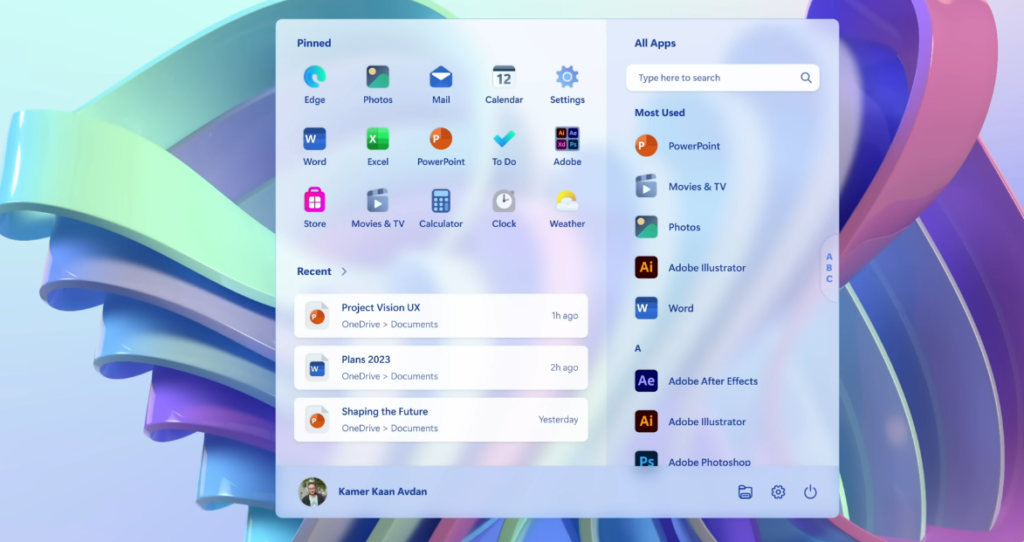
Microsoft is able to create versions of Windows that act differently depending on the machine and the user by breaking the operating system down into its component parts. To become faster, leaner, and more focused, one machine might load legacy support for older apps, while another might forego it completely. Like an organism adjusting to its surroundings, Windows is deliberately losing weight.
That flexibility would be significant on its own. It’s only half the story, though.
The more significant change is that Windows will no longer only run applications. Intelligence will run it.
For many years, artificial intelligence was mostly located in remote data centers and was accessed via cloud services and internet connections. However, Windows 12 will make advantage of Neural Processing Units, which are specialized chips found in contemporary PCs that can run artificial intelligence directly on the device. Although the divergence may seem technical, it alters a fundamental aspect.
It indicates that your machine can think without a server’s approval.
On-device AI is instantaneous. Without transferring information to another location, it may predict needs, evaluate patterns, and modify behavior. Features like Recall, which discreetly records your actions so you may access them later—not by file name but by memory—have already been alluded to by Microsoft.
Not look. Recall.
It’s a small but unnerving distinction.
Since the beginning, personal computers have been reactive. It responded when you clicked. You looked, and it was there. However, an operating system with memory, prediction, and suggestion capabilities elevates computers to a new emotional realm. It starts to feel less robotic.
More of a friend than a tool.
This is made possible by the modular architecture, which allows intelligence to exist as a separate layer. AI doesn’t need to be clumsily installed on Windows. It integrates into its structure and has the capacity to develop and change on its own.
And it’s important that you are independent.
Major upgrades in prior versions of Windows felt like building undertakings. They took hours, occasionally failed, occasionally removed settings, and occasionally brought in odd new issues. People learnt to fear, mistrust, and postpone updates.
CorePC promises more focused, smaller upgrades. Fix one component and ignore the others.
It gives Windows a more dynamic sense rather than that of a static product.
As I read Microsoft’s quiet engineering notes, I recall thinking that this seemed more like software evolution than software maintenance.
Additionally, the move comes at a precarious juncture in the history of computers. Once the hub of digital life, the PC has been slipping into obscurity in the public consciousness. Smartphones took over as the main gadget. In classrooms, tablets have taken the role of laptops. Cloud computing even lessened reliance on local computers.
There were still windows everywhere, but their cultural significance diminished.
It seems like Microsoft is attempting to regain its prominence with this revamp.
AI-powered Windows that is modular can be used on laptops, tablets, hybrid devices, or even unimagined products. Depending on the situation, it can enlarge or contract, removing extraneous layers or introducing fresh intelligence.
Fixes for the operating system cease.
It becomes situational.
Additionally, Microsoft has strategic power because of its flexibility. ChromeOS might see more direct competition from a Windows version that is lighter. The smooth integration of Apple’s environment might be matched by a more sophisticated version. It is possible for various Windows experiences to coexist without being distinct products.
The plural is Windows.
This fragmentation carries some risk. Consistency has always been the hallmark of Windows. The behavior of a document saved on one computer was same on another. That predictability was essential to software developers.
Variability is introduced by modularity.
Uncertainty is introduced by variation.
Some users will accept it. It will be mistrusted by others. Many people may never be aware of it consciously, but they sense it in subtle ways, such as quicker startup times, more intelligent searches, and updates that don’t interfere with their work.
Rarely do the most significant technology advancements make a big splash. They seem like conveniences.
This change is accompanied by another emotional undercurrent. For many years, individuals thought of their computers as belonging to them and something they could fully control. Because they made the decision, every file, setting, and behavior existed.
That interaction is complicated by an intelligent operating system.
Control is shared if Windows makes recommendations, forecasts behavior, and molds workflows.
Not gone. However, it was shared.
More than any hardware innovation, that small change could define the next phase of computing.
These days, computers are more than merely execution tools. They are starting to take part.
Microsoft has previously attempted to reimagine Windows. Windows 8 made an unsuccessful attempt to impose touch computing. Although Windows 10 was supposed to be the last version, it was later replaced. Windows 11 preserved the foundation while polishing the exterior.
The foundation itself is evolving this time.
Not readily apparent. Not in a big way.
Silently.
