

The hard drive’s label was scuffed and curling at the edges, and it was sitting in a plastic bin close to a repair shop’s corner. It appeared to be trash, the sort of abandoned item that no one ever claims. However, the technician handled it with care, rotating it in the fluorescent light as though inspecting a delicate and potentially valuable object.
Repair labs and data recovery companies are quietly coming to the realization that some of these forgotten drives are worth a lot more than the computers they were originally used on. Because of what might still be contained within—unfinished manuscripts, business financial records, cryptocurrency wallets, design archives, or just priceless personal histories—rather than the hardware itself, which is frequently outdated.
A hard drive’s actual worth might not be significantly influenced by its appearance. When a client discovers that their lost data can still be saved, recovery engineers discuss that moment. It has become commonplace to observe their face shift from one of resignation to cautious optimism. The economics starts with that emotional change.
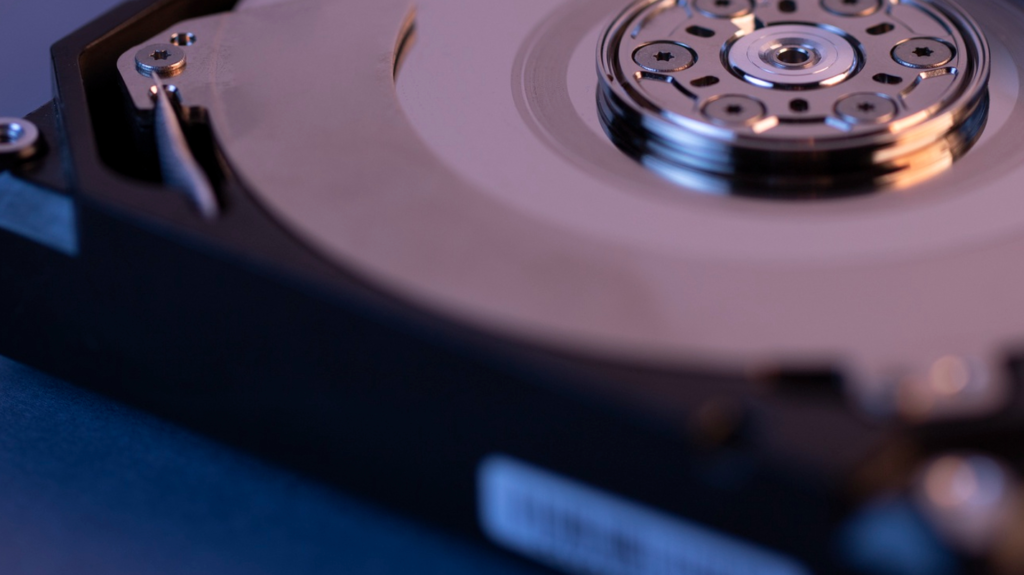
For something that has its roots in the digital realm, the process itself is oddly physical. Technicians in anti-static gear lean over metal workstations in recovery labs, opening drives in cleanroom settings where dust is considered an enemy. The platters are round, shiny discs that almost have a decorative appearance. However, they contain magnetic remnants of a person’s previous choices, preserved with no hope of becoming priceless relics.
| Item | Details |
|---|---|
| Topic | Economic and technical value of old or failed hard drives in the data recovery industry |
| Industry focus | Professional data recovery services, forensic recovery labs, digital forensics |
| Typical recovery cost range | Often $700 to $1,200 or more depending on damage severity and labor involved |
| Why drives have value | Lost business data, intellectual property, personal archives, and legal evidence can justify high recovery costs |
| Specialized requirements | Cleanroom facilities, donor parts, proprietary tools, and highly trained engineers |
| Notable company example | DriveSavers Data Recovery (founded 1985, pioneer in commercial recovery services) |
| Reference links | Gillware Data Recovery Cost Guide • DriveSavers Official Website |
The cost of recovery is high. The average case may cost hundreds, thousands, or even more. People are surprised by that figure until they realize what’s involved: specialized imaging systems operating for days, firmware reverse-engineering, and donor drives sourced for spare parts. These engineers seem to work in a peculiarly interdisciplinary field that combines elements of archaeology and mechanics.
Old drives are now seen as possible assets rather than trash, which is a recent change. Businesses and investors, particularly those dealing with digital assets, appear to be becoming more conscious of the possibility that early storage devices may hold important proprietary data or misplaced keys. There are rumors—more rumored than verified—that drives containing millions of dollars’ worth of cryptocurrency are hidden behind mechanical failure.
Shelves of labeled drives in one corner of a storage facility look more like an archive than a pile of scrap. They are all symbols of uncertainty. Most will not produce anything of value in terms of money. However, some may hold something that can change their owner’s life. The industry survives because of this imbalance.
Additionally, people are unaware of how much data is produced by modern life. Unfinished creative projects, family photos, and email archives all build up subtly and are rarely adequately backed up. The loss seems excessive when a drive fails. Files aren’t the only thing going missing. Its physical anchor is being lost.
The technicians are aware of this. In phone conversations, they hear it. When clients describe research projects, business documents, or wedding photos, their voices are equal parts regret and urgency. Recovery companies have mastered the art of overcoming both emotional and technical obstacles.
It’s difficult to overlook how this sector of the economy runs counter to the disposable nature of contemporary technology. Instead of being repaired, devices are meant to be replaced. However, the information within them defies that reasoning. It demands its own worth.
Additionally, a competitive tension is starting to surface. Recovery organizations are subtly increasing their capacity, making investments in new equipment, and compiling donor part libraries. They are aware that the opportunities and challenges associated with storage technologies are constantly changing. The business is surrounded by a sort of protective moat thanks to the uncommon skills needed.
Nevertheless, everything is defined by uncertainty. It is not possible to save every drive. Every situation carries some risk, whether it be physical damage, scratched platters, or corrupted firmware. Even seasoned engineers occasionally hit a breaking point from which there is no way back. Although those instances are not publicized, they influence the cautious tone of the industry.
The drives themselves continue to age in the meantime. waiting for someone to make a decision about their future while sitting in closets, drawers, and abandoned boxes. Most won’t ever be investigated. Without hesitation, some will be destroyed.
And some will prove to be surprisingly valuable.
