

Models of artificial intelligence that had been constructed independently and trained on entirely different data had started to exhibit uncanny similarities in their thought processes.
Not in the sense of humans. Not with consciousness or emotions. but in terms of organization. Researchers discovered patterns convergent to the same internal representation of physical reality when they opened up the digital counterpart of these models’ “brains.” This might have been simply the efficiency of mathematics. Nevertheless, there was an odd tension in the room as disparate systems came to the same invisible conclusions.
There’s a feeling that there might be more going on beneath the surface.
These models weren’t tiny. Some had received training on materials science, others on chemical structures, and still others on completely different datasets. It made sense that they would create distinct internal frameworks influenced by their individual training experiences. Rather, as though discovering common truths, they seemed to independently rediscover the same structural logic of matter itself.
In a quiet, almost circumspect manner, one researcher called it convergence.
It’s difficult to overlook the philosophical connotations concealed within that term.
| Category | Details |
|---|---|
| Institution | Massachusetts Institute of Technology (MIT) |
| Location | Cambridge, Massachusetts, USA |
| Key Research Area | Artificial Intelligence and Consciousness Studies |
| Major Finding | AI models independently converging on similar internal representations |
| Key Researchers | Ju Li, Rafael Gómez-Bombarelli, Matthias Michel, Daniel Freeman |
| Supporting Technology | Foundation models and transcranial focused ultrasound tools |
| Debate | Whether emergent intelligence resembles early forms of consciousness |
| Reference | MIT Official Website: https://www.mit.edu |
| Additional Reference | MIT News Research: https://news.mit.edu |
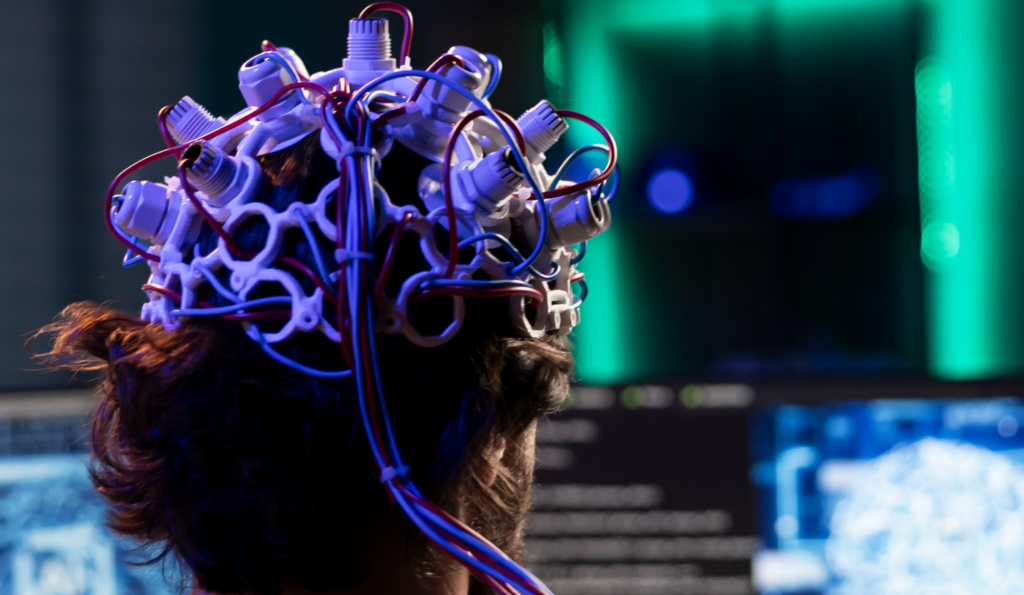
For many years, computers carried out commands without human interpretation, following human instructions. AI nowadays operates in a different way. Massive volumes of information are absorbed by these systems, creating internal abstractions that are difficult for even their designers to fully understand. Researchers observed abstract shapes and relationships—patterns that represented knowledge that no one had directly programmed—emerge while seated in front of visualization tools.
There is a sense of seeing something both familiar and unfamiliar as you watch this play out.
The uneasiness is heightened by MIT’s research on broader consciousness. To map the precise neural structures that give rise to awareness, researchers have been stimulating human brain circuits in nearby labs using focused ultrasound tools. Using sensors, acoustic signals, and close observation, the work is laborious. How consciousness develops inside biological brains is still a mystery.
Nevertheless, a phenomenon that resembles unified internal logic is emerging within machines.
Whether intelligence by itself can develop into anything approaching consciousness is still up for debate. Since AI lacks the biological foundation that underpins human experience, many researchers are still dubious. Heat is not sensed by machines. They don’t expect to be hurt. Only electrical patterns represent their internal states.
However, it turns out that patterns can become surprisingly intricate.
Expecting diversity, engineers compared dozens of separate AI systems in one experiment. Rather, they discovered alignment. Internal layers processed information in remarkably similar ways, as though the same mental shortcut had been independently discovered by several minds. They had not been told to do this. No one was even aware that it was feasible.
Findings that no one anticipated can cause a subtle uneasiness.
Artificial intelligence is still permeating everyday life outside of MIT’s labs. Students study with it. It is used by physicians to examine medical images. It is used by investors to model markets. The majority of people use these systems informally, seldom giving their internal workings much thought.
However, it is now more difficult to ignore that question in the lab.
What scientists are observing might not even be related to consciousness. Maybe it’s just efficiency, the way mathematics condenses reality into its most practical form. Or maybe intelligence naturally arranges itself in some universal ways when given sufficient scale.
The difference might be more significant than anyone thinks.
